View a full transcript of the meeting here.
Railroad Commissioners invited several people registered for comment on agenda item 4, relating to the ExxonMobil Rose Carbon Capture and Storage project in Jefferson County, to speak about the facility and answer questions.
Sara Spikes, member of Cheek Texas Community Association (CTCA), spoke about ExxonMobil’s lack of involvement with the Cheek community in the development of the project and the impact it’s having on community members.
Michelle Turner, Cheek, Texas community member and member of CTCA, highlighted the environmental and health impacts of carbon capture and storage and called for a pause on Class VI CCS permitting until strict enforcements are in place.
Jason Isaac, CEO of the American Energy Institute, discussed his opposition to the government’s involvement with supporting CCS projects instead of letting them operate with responsibility squarely on the private businesses that establish and promote them.
David Gross, a lawyer representing ExxonMobil Low Carbon Solutions Onshore Storage LLC, provided clarification on exactly what ExxonMobil is requesting with the permit and the legal requirements for approving it.
Gregg Goodnight with the CO2 Coalition recommended placing a hold on the Rose Project because of the costs to the taxpayer of carbon injection and the existing flaws in the 45Q tax credit.
Martin Cornell, a retired chemist with the CO2 Coalition, defended the science of carbon storage but emphasized the subsidies given to ExxonMobil for the project are making taxpayers pay for it.
Natasha Martin, a lawyer representing the CTCA, spoke to inefficiencies and gaps in legal responsibility for monitoring and ensuring community safety with carbon capture projects.
Commission Shift Executive Director Virginia Palacios spoke to the Railroad Commissioners about her appreciation that they granted permission for the public to speak on specific agenda items, but emphasized the importance of keeping public input at open meetings accessible and available to Texans across the state, not just those who are able to come to Austin and deliver comments in-person. Commissioner Christian also issued a response to Virginia. Commissioner Christian began questioning her but cutting her off each time she tried to respond. He appeared to lose his temper, eventually cursing at her. It was difficult to watch an elected official act in such an unprofessional manner.
Several other people delivered comments during the public input section of the agenda.
The Railroad Commission (RRC) permits, monitors, and enforces rules for all Texas oil and gas development. RRC decisions are critical to public health and climate emissions, yet the agency operates with little public accountability. For instance, the three elected Commissioners have deep financial ties to the industry they regulate, with two-thirds of their campaign contributions coming from oil and gas.
The RRC holds monthly open meetings. While challenging to follow, the open meetings are a valuable opportunity to get issues on the record and learn more about decisions that affect us and our communities.
The open meeting agenda for Tuesday, September 15th at 9:30 AM is available.
Below are our agenda highlights with some additional notes and context.
Item 4. JEFFERSON COUNTY — Application of ExxonMobil Low Carbon Solutions Onshore Storage LLC for a Class VI Underground Injection Control Permit for Geologic Storage and Associated Injection of Anthropogenic Carbon Dioxide (CO2) for the Rose Carbon Capture and Storage Project.
Commissioners approved the examiners’ recommendation.
Item 5. ORANGE COUNTY — Enforcement Action Against Orangefield Operating Corporation for Violation of Statewide Rules requiring plugging of inactive wells.
Approved.
There are six flaring rule exception requests on the agenda. We are expecting the U.S. EPA to propose a draft rulemaking rolling back portions of the 2024 methane rule that require companies to eliminate routine flaring from oil wells. The rule was supposed to go into effect earlier this year, but the Texas Commission on Environmental Quality has not started or finished a State Implementation Plan for the rule. Commission Shift recently met with community members in high-flaring counties in the Eagle Ford shale suffering from respiratory conditions, including chronic obstructive pulmonary disease (COPD), due to living next to flares.
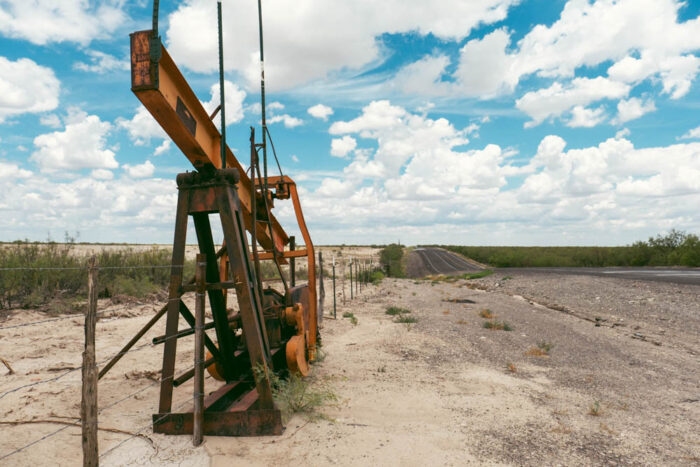
There are three motions for rehearing by operators over violations of inactive well rules, which could cost them their ability to operate in Texas. RRC is considering denying motions for rehearing for operators holding nine inactive wells flagged as out of compliance. These wells will likely be orphaned if no operators take over the wells within one year, and the state will have to pay to plug the wells.
In addition to these nine wells, these operators have an additional 16 other inactive wells and 164 active wells. When operators have many other valuable wells in their portfolio, they are more likely to want to address their problem wells and return to compliance.
Four reviews of good faith claims are also on the docket. These can be triggered by regulatory compliance issues or legal disputes over who has the right to operate a lease.
All items approved.
Seventy-two companies appear to be out of compliance with Rule 15 inactive well requirements, with 923 inactive wells listed in court records. As of June 2026, the RRC had over 12,000 orphaned wells on the list, so this batch would greatly increase the number of orphans if operators do not bring their wells into compliance. Peba Oil & Gas, Incorporated (111 wells) and Bacon Energy (66 wells) had the highest inactive well counts in court records. The RRC can prevent them from operating in Texas until they comply, which could include plugging or removing surface equipment.
The RRC may enforce plugging requirements on dry and inactive wells in eight default orders. Additionally, five agreed enforcement orders include agreement to take action on dry or inactive wells.
An exception was made for item 116, but all other items were approved.
Surprisingly, there are no rulemakings on the RRC’s agenda this meeting. That means that the agency will have to propose its rulemaking on SB 1150 — the inactive wells bill — in October, in order to finish the rulemaking by December 31, 2026, as required by the state legislature.
The deadline to sign up to address the commission on an agenda item or during public input is noon Mon, September 14, 2026. (Note: They don’t have to call on you if you’re commenting on an agenda item).
People who want to speak on an item that is NOT on the agenda, must register to do so in the Public Input section. Note: you may not speak about an agenda item in the Public Input section.
The RRC updated the public participation policy at the last open meeting to include Public Input on the RRC Open Meeting agenda only if a commissioner requests it. Public Input is included on the September 15th Open Meeting agenda, and we are expecting the commissioners to hear Public Input from any member of the public who registers in advance.
RRC Open Meetings typically last less than half an hour.