Commission Shift Analysis of Railroad Commission Monitoring and Enforcement Plan (FY 2027)The Workover Blog | Jun 22, 2026

Every year, the Railroad Commission of Texas (RRC) publishes a Monitoring and Enforcement (M&E) Plan for the following fiscal year (FY). The state legislature requires RRC to seek input from stakeholders when developing the plan, so RRC typically opens a 30 day public comment period on the plan. Commission Shift welcomes this opportunity to provide feedback and has encouraged others to offer their own each year. The RRC publishes all public comments on the plan. This year, the public comments overwhelmingly called for the commission to adopt Commission Shift’s priorities.
What stands out in this year’s plan

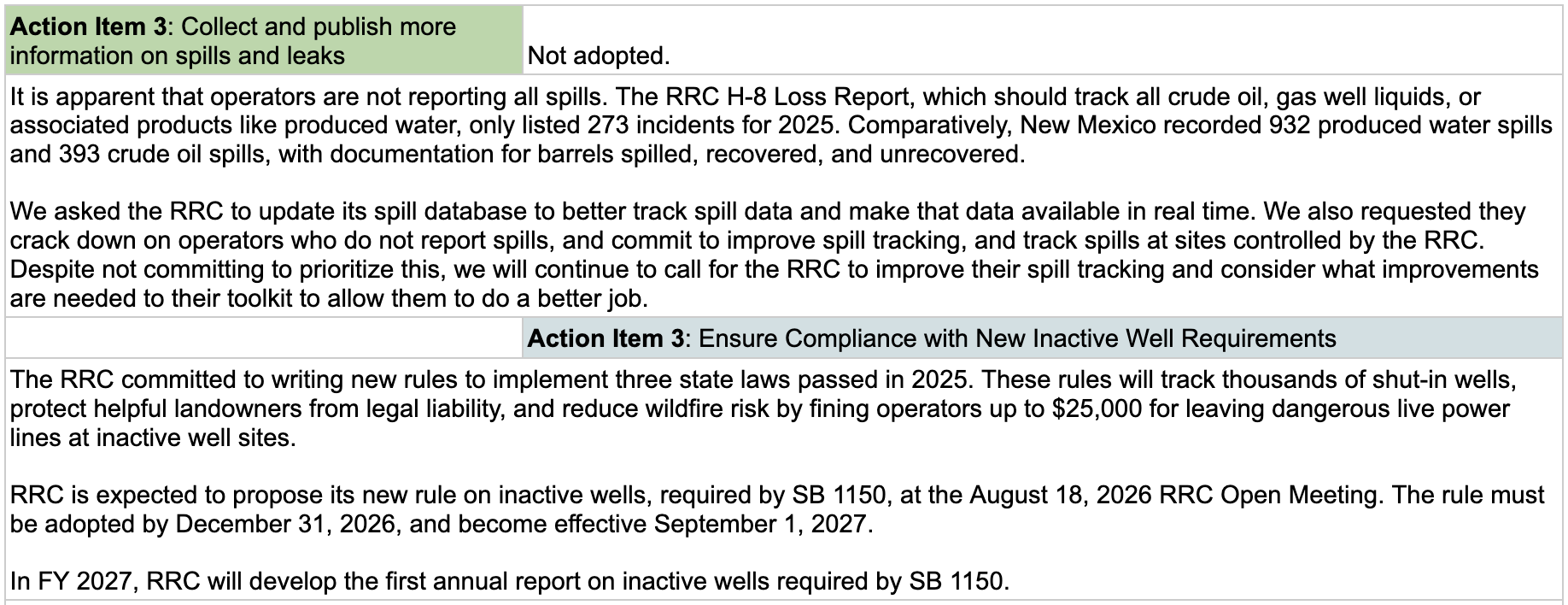
  • Implementing new rules for inactive wells: This August, RRC will undertake its rulemaking for SB 1150, passed in 2025, which mandates that companies with wells over 15 years inactive prepare compliance plans to plug or reactivate their wells. Per SB 1150, RRC will also prepare its first report for the legislature on inactive wells in FY 2027. SB 1150 goes into effect September 1, 2027.
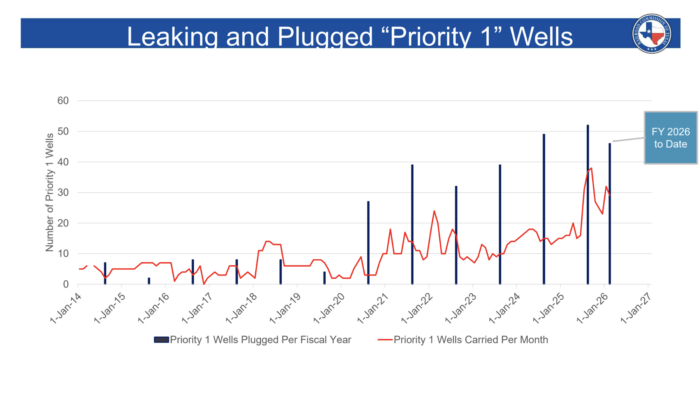
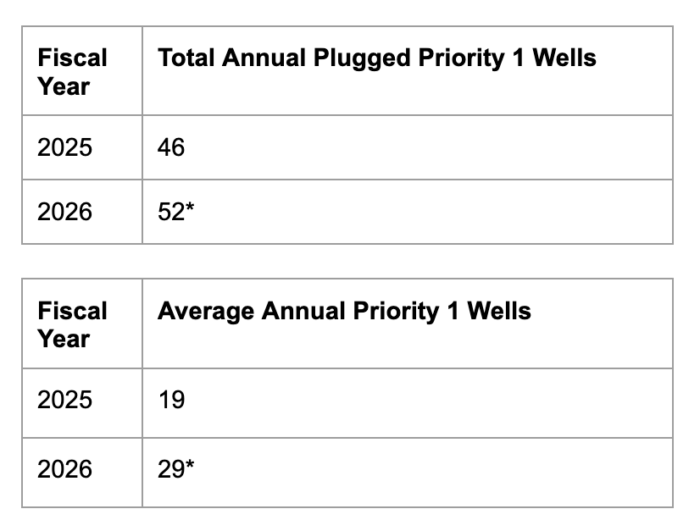
  • Scrutiny of underground injection control (UIC) wells: RRC will more closely monitor permit requirements for Underground Injection Control (UIC) wells in the Permian Basin as a part of their FY 2027 M&E Plan. Over the years, it has become increasingly clear that UIC wells connecting with both plugged and unplugged wellbores have resulted in leaks and emergency incidents. In 2025, the legislature made a special appropriation of $100 million to the RRC to address emergency incidents. The RRC has faced a significant rise in costly emergency well-plugging incidents. A notable example involved a previously plugged “zombie” well that became active again in the parking lot of the Grand Falls First Baptist Church. High priority well plugging has increased drastically from year to year, with the RRC plugging the same number of Priority 1 wells in the first half of FY 2026 that it did in all of FY 2025.

Source: “Response to Oil and Gas Emergencies” presentation by the Railroad Commission of Texas, March 24th, 2026.

New sections in the plan

  • Mid-Year Report: In conversations with RRC staff, Commission Shift requested that the agency report its progress on the prior year’s M&E plan each year. This year, RRC added a Mid-Year Report section to the M&E plan for the current fiscal year. This section provides a high-level assessment of action item goals related to the FY 2026 M&E Plan. In general, the RRC is on track to meet those goals, except that it has digitized only 2 million of the 12 million records it set out to digitize.
  • Statutory Basis for Operational Activities: This new section provides a table of statutes and rules that give the RRC authority over specific issues and operational functions.
  • Appendix G: Oil and Gas Division Contact Information: This new appendix that offers Oil and Gas Division Contact Information by function.

Commission Shift’s recommendations partially adopted

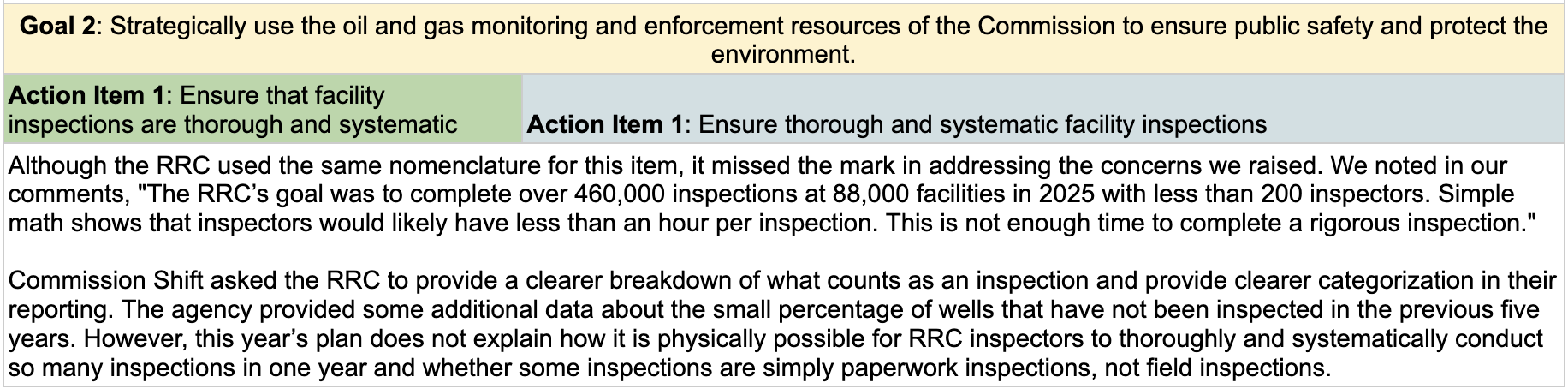
The RRC superficially included the following recommended action items in the FY 2027 Plan by adopting the titles but not the content of our recommendations:

  • Conduct, track, and report RRC witnessing of well plugging and testing
  • Ensure that facility inspections are thorough and systematic
  • Expand public outreach on carbon dioxide injection.

The agency did not address, in title or content, some of the more substantive issues Commission Shift identified in our recommendations.

Goals

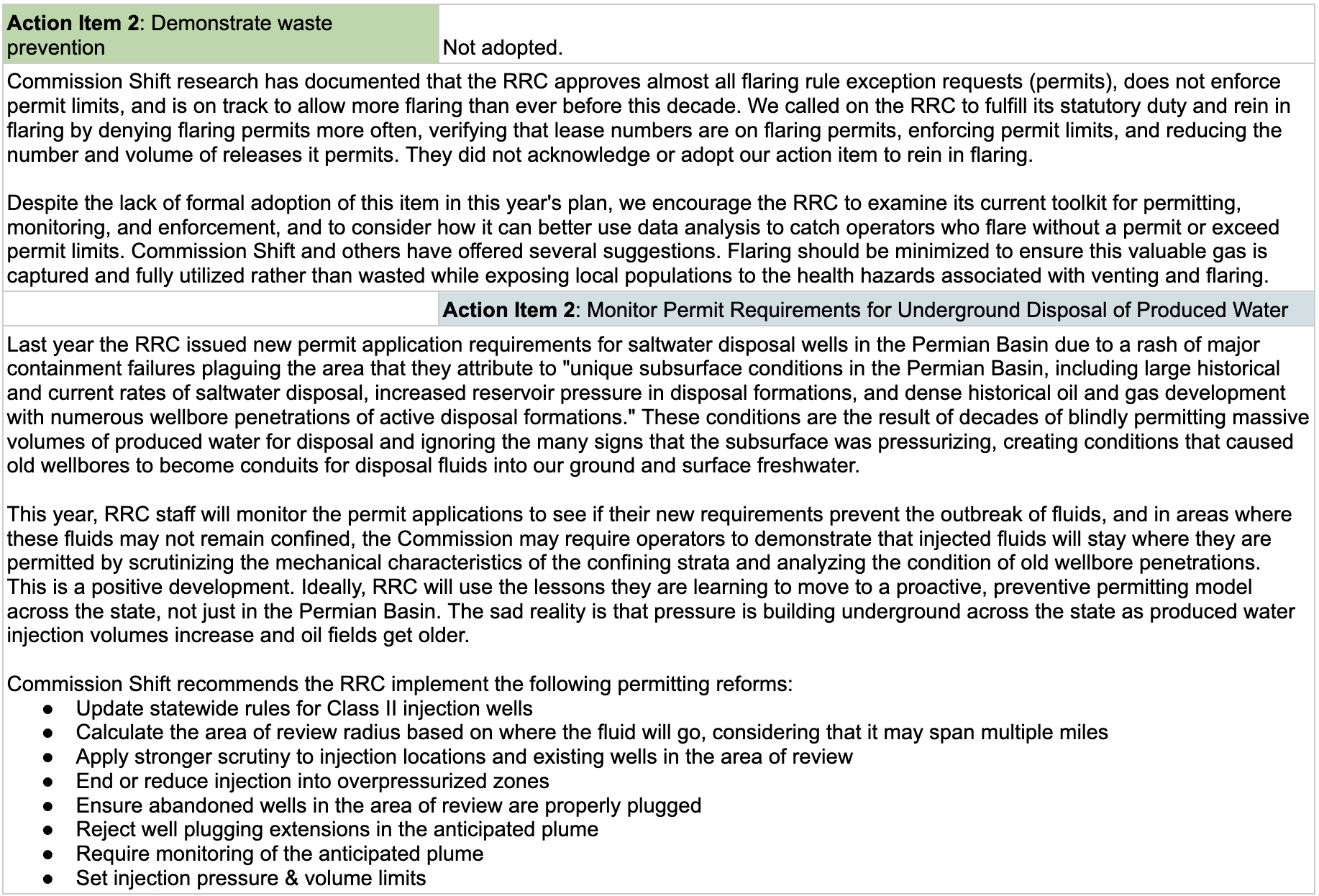
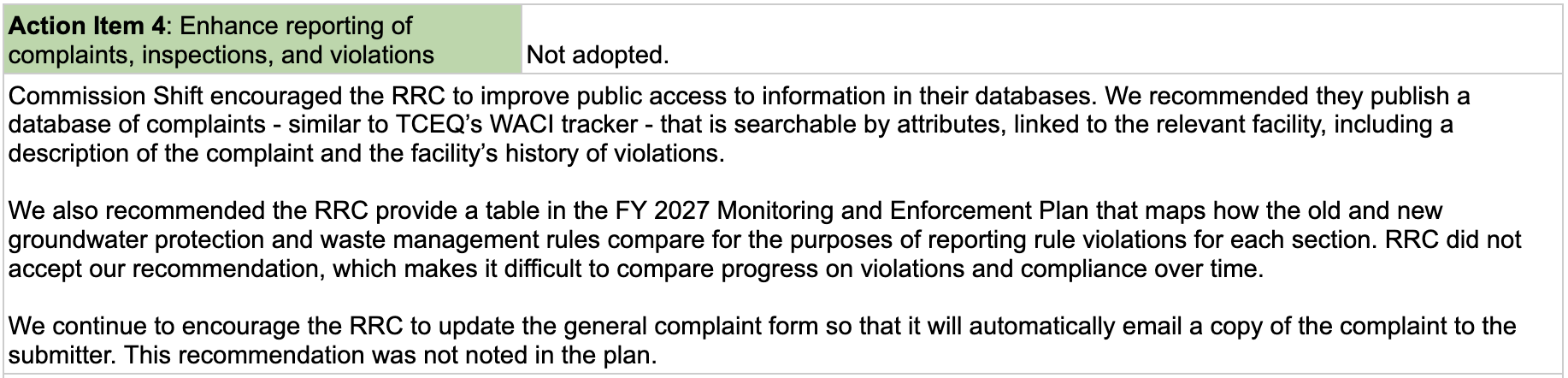
A major feature of the M&E plan is the RRC’s annual action item goals, which highlight its top priorities for the year. We’ve prepared a table that provides commentary on how and if the RRC incorporated Commission Shift’s recommendations into their annual goals. Our full public comments and recommendations on the plan are available here.

View this table as a PDF here.


We’re encouraged by the RRC’s partial adoption of some of our recommendations, and we will continue to advocate for more robust implementation of our recommendations. In particular, we want to see the agency develop an enforceable flaring rule and demonstrate a more timely and transparent response to public complaints. Furthermore, we will continue to push for higher quality inspections and swift enforcement actions, alongside stronger oversight for mechanical integrity testing.
Related News