Commission Shift Executive Director Virginia Palacios spoke to the Railroad Commissioners about her appreciation for their leadership and respect, but also emphasized the importance of expanding, not taking away, guaranteed public input at open meetings.
Kaiba White spoke about her disappointment in the conduct of commissioners during the September open meeting, during which Commissioner Christian used a misogynist expletive while criticizing Commission Shift’s Virginia Palacios. Before Kaiba’s allotted three minutes were up, Commissioner Craddick cut her off and a bailiff approached her, presumably to escort her out of the meeting.
After Schuyler Wight delivered his testimony about the oil and gas wells threatening his property, Commissioner Wayne Christian asked him about the public input policy the commission passed in its August open meeting. This was nearly entirely off-topic to Schuyler’s comments. Christian apologized to Virginia Palacios, Commission Shift’s executive director, “if she was offended.” Commissioners Wright asked Schuyler relevant questions about his original testimony.
Comments by Adrian Shelley
Comments by Alexis Iwasiw
Comments by Namrata Chhillar
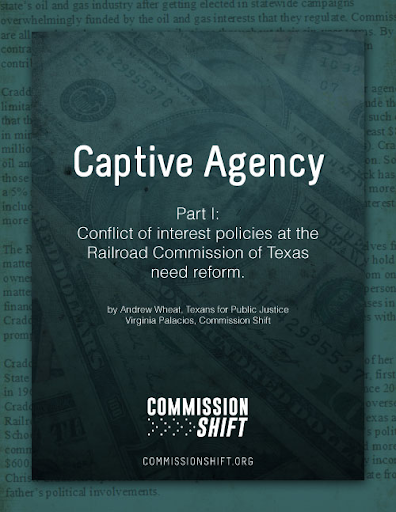
The Railroad Commission (RRC) permits, monitors, and enforces rules for all Texas oil and gas development. RRC decisions are critical to public health and climate emissions, yet the agency operates with little public accountability. For instance, the three elected Commissioners have deep financial ties to the industry they regulate, with two-thirds of their campaign contributions coming from oil and gas.
The RRC holds monthly open meetings. While challenging to follow, the open meetings are a valuable opportunity to get issues on the record and learn more about decisions that affect us and our communities.
The open meeting agenda for Tuesday, October 6th at 9:30 AM is available.
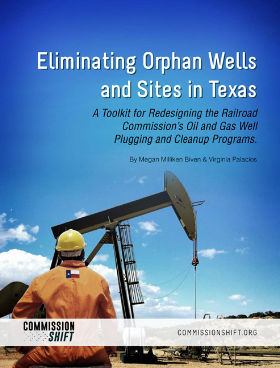
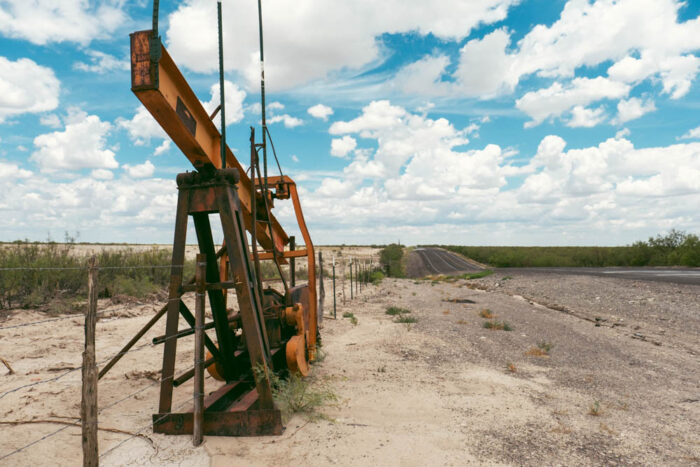
Inactive wells pose a huge risk to Texans, and thanks to the Texas Legislature’s passage of SB 1150 last year, the Railroad Commission has new tools to address these wells. Agenda item 477 will finally begin the rulemaking to implement SB 1150.
Below are our agenda highlights with some additional notes and context.
Twenty-three companies with over 600 inactive wells cited at their hearing appear to be out of compliance with Rule 15 inactive well requirements. Using inactive well records, and RRC can prevent them from operating in Texas until they comply, which could include plugging or removing surface equipment.
The operators may file a motion for rehearing to buy more time to come into compliance, but if they don’t come into compliance by the time the commissioners vote on their motion for rehearing, they may lose their ability to operate in Texas and the wells will be orphaned
The largest of these companies is Eagleridge Operating, LLC. Although court records indicate the company holds 300 inactive wells, current records indicate 1500 inactive wells, with over 2,700 wells still in operation. Eagleridge has been in operation for a while and has had several legal enforcements. A handful of leases have generated repeat violations, including a disposal well that has had several violations that the company continued to operate after they were ordered to cease (aka sever) operation.
It’s concerning that an operator as large as Eagleridge would initially act with such impunity and not address violations, especially in a strong market, and would then choose to lose their ability to operate instead of fixing their problems.
This month’s docket also includes two examples of an emerging pattern: recently formed companies take over a large inventory of wells from other operators, and then cede plugging responsibility for those wells to the state. This month’s companies are QRI Industries, Inc and Fusion Energy Holdings, LLC.
Formed in early 2025, QRI has never drilled a well, and 56 of its 68 inactive wells have been inactive for more than 5 years. In its short life, it racked up 119 violations.
Fusion Energy obtained its P-5 in April 2024 and has also never drilled its own well. While most of its 29 inactive wells are less than 5 years inactive, the company has still racked up 38 violations, most of which are for inactive unplugged wells. Fusion Energy’s lease portfolio was obtained from El Reno Energy who lost its P-5 in September 2024, the same year the leases were acquired.
Another corporation, REO Operating LLC , has been in operations for over a decade, and has had a long pattern of violations, legal enforcement actions, and unpermitted waste disposal. Despite having 110 legal enforcement referrals between 2022 and 2025, formal enforcement cases and orders still open, and receiving a warning in April 2026 that it is at risk of losing its ability to renew its P-5 due to failure to bring inactive wells into compliance, REO was allowed to take on another lease in August 2026 from Progenies Operating LLC. This is another example of the RRC granting a transfer to a company that is actively at risk of losing its license to operate.
This month the RRC will begin its rulemaking for SB 1150, as proposed in item 477. SB 1150 is meant to ensure inactive wells are plugged, and it is supposed to prod a company like Eagleridge to plug their aging inactive well population before becoming the state’s problem.
But not really. Of Eagleridge’s 1500 inactive wells that are at risk of becoming the state’s responsibility to plug, only 157 are more than 15 years inactive and subject to SB 1150’s plugging extension limit. And even these might not be plugged if Eagleridge requests and qualifies for the new exceptions allowed by SB 1150. Qualifying exceptions are if an operator has a ‘history of reactivating wells,’ qualifies for a ‘financial hardship,’ provides a compliance plan, or posts a financial bond for the well. The majority of wells Eagleridge will leave the state will still not be required to be plugged by SB 11150.
SB 1150 adds a provision that outgoing and incoming operators jointly file a written statement affirming the well is compliant with inactive well requirements and the transfer is conducted in good faith. SB 1150 requires the RRC set procedures for transfers and before granting extensions, weigh the operator’s compliance with their compliance plan and with inactive well requirements. In theory, the RRC’s rulemaking for the new inactive well requirements and violation penalties could help limit the inactive wells that are being orphaned to the state by addressing the arguably “bad transfers” that corporations like QRI Industries, Ponderosa, Fusion Energy Holdings, El Reno Energy LLC, REO Operating, and Progenies Operating LLC appear to be engaging in.
These cases have similar patterns: a distressed or soon-to-be-distressed operator offloads inactive/marginal wells to a newly formed, thinly capitalized operator, through a transfer process that was reviewed by the RRC, and documented in court filings — and the review didn’t catch or prevent the transfer.
This upcoming rulemaking is an opportunity for the RRC to review and update their transfer rules. The RRC should explicitly disqualify transfers from operators already in enforcement/delinquent status without a detailed review, and establish clear requirements around what transfers may be allowed in these situations.
Additional suggestions proposed by a Commission Shift working group for what the rulemaking could fix beyond bad transfers can be found here.
Item 478: Proposed amendments to 16 TAC §§5.102 and 5.202-5.206 relating to Class VI injections wells.
Item 479: Proposed amendments to 16 TAC §7.351, Gas Utility Pipeline Tax.
Surprisingly, there are no rulemakings on the RRC’s agenda this meeting. That means that the agency will have to propose its rulemaking on SB 1150 — the inactive wells bill — in October, in order to finish the rulemaking by December 31, 2026, as required by the state legislature.
The deadline to sign up to address the commission on an agenda item or during public input is noon Mon, October 5th, 2026. (Note: They don’t have to call on you if you’re commenting on an agenda item).
People who want to speak on an item that is NOT on the agenda, must register to do so in the Public Input section. Note: you may not speak about an agenda item in the Public Input section.
RRC open meetings typically last less than half an hour.