Laredo, TX — The number of leaking oil and gas wells in Texas is increasing fast. According to an updated emergency response plan the Railroad Commission (RRC) presented to oil and gas operators in March, the agency has already plugged 46 high-priority wells in the first six months of this fiscal year, compared to 52 in all of FY 2025. This count did not include a new leak that sprang up last week from a plugged well under the parking lot of the First Baptist Church in Grandfalls, TX.
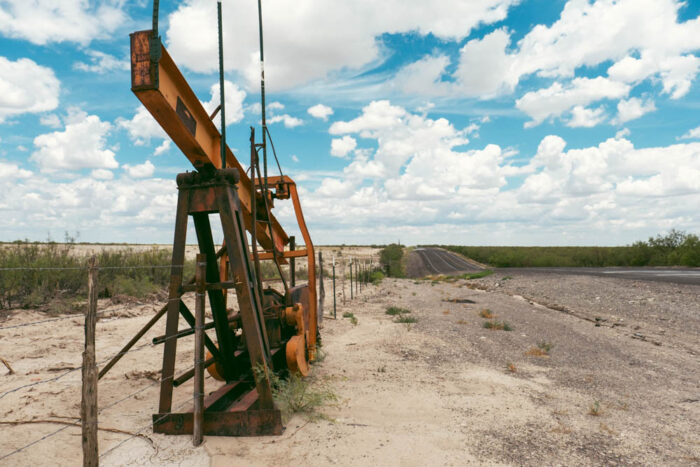
Compounding this problem is the significant number of unplugged inactive and orphaned wells. Despite receiving a record amount of funds for well plugging from state and federal sources, the RRC is still failing to keep pace with the number of orphaned wells added to the list. As of April 2026, the orphaned well count has increased 37% from last year and is now over 12,000 wells—shifting massive cleanup costs and liability onto taxpayers. The Railroad Commission indicated in its emergency response plan that it will need far more than the additional $100 million in taxpayer dollars it received last session for emergency well plugging.
Feeding the orphan counts is the large backlog of inactive wells with active operators, currently over 120,000 wells. Weak laws passed by the Texas Legislature have failed to ensure operators pay to plug their own wells. These laws allow operators to get plugging extensions almost indefinitely and allow major companies to transfer their plugging liabilities to smaller companies, resulting in costs that are increasingly falling on taxpayers. Only the Texas Legislature has the power to increase fees, surcharges, taxes, and financial assurance requirements to generate revenue for well plugging from oil and gas operators.
While unplugged wells are a significant threat to groundwater, the high-volume underground injection of wastewater produced from oil and gas wells is also to blame for well failures. Operators in the Permian handle more than 22 million barrels of produced water daily, with much of that being reinjected underground contributing to a record 250 million barrels per month injected in the Delaware Basin. In the seven Delaware Basin counties experiencing the most acute failures, produced water injection has increased by nearly 500 percent from 2010 to 2025.
The First Baptist Church Grandfalls leak, stemming from a well that was drilled and plugged in the 1930s, highlights the growing crisis of “zombie wells”—unplugged or poorly plugged wells that serve as conduits for toxic fluids and gases. This contamination can introduce salt, hydrocarbons, carcinogenic VOCs, or radionuclides into water supplies and the environment.
Grandfalls serves as a striking example of the consequences that arise when pressurized injection interacts with legacy wells. The town is situated in a region plagued by geyser-like blowouts and the state’s longest-running continuous blowout at Lake Boehmer. GIS viewer tools show 13 active injection wells and nearly 700 documented oil and gas wells within a 2.5-mile radius of the First Baptist Church property.
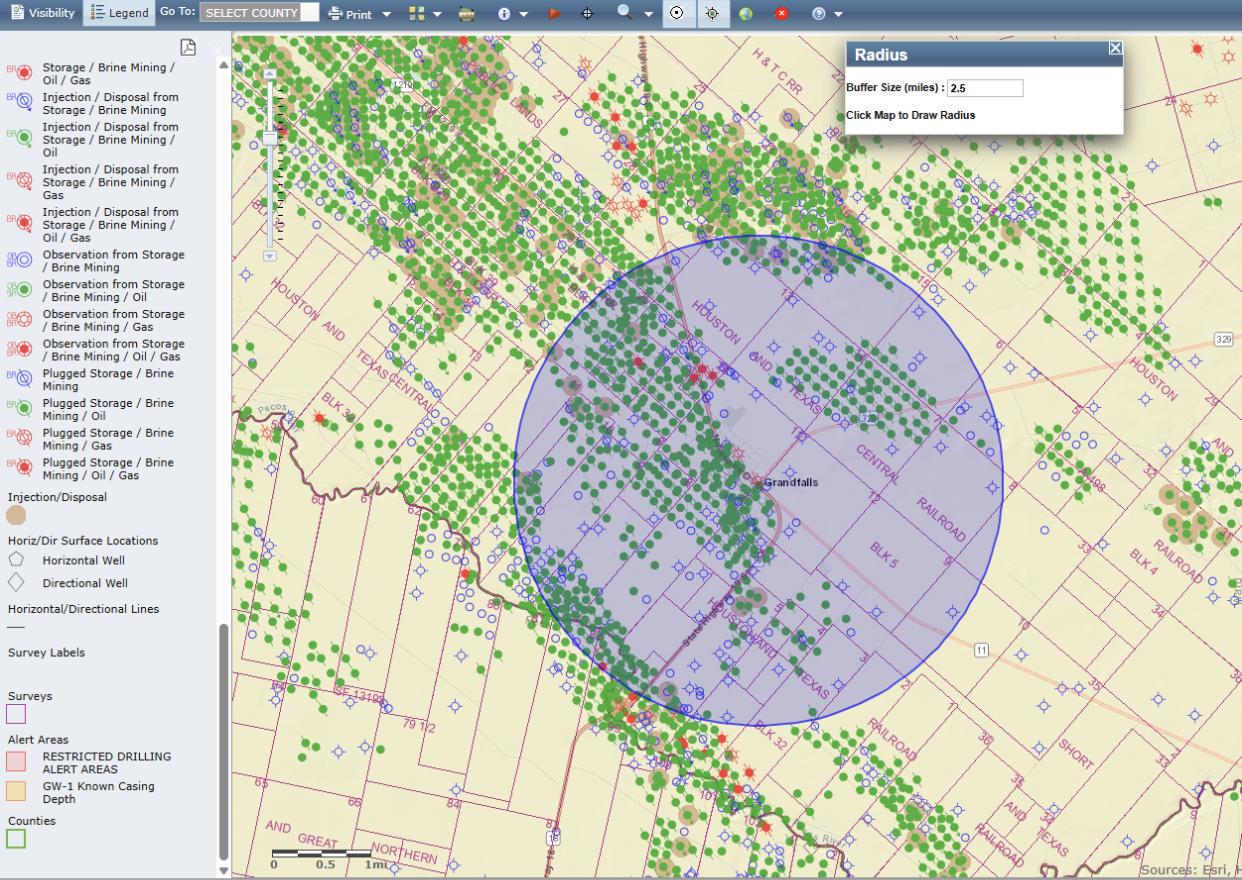
University of Texas at Austin, Bureau of Economic Geology, Smye, K., Ge, J., Leng, J., Hoffman, D., Calle, A., Hennings, P., & Nicot, J.-P. (2025). Injection Capacity of Shallow Reservoirs in the Permian Basin: Implications for Wastewater Management in the World’s Most Productive Oilfield. 2025AM – 10699. https://doi.org/10.1130/abs/2025AM-10699. The map depicts a 2.5 mile radius around the First Baptist Church, located at 329 1st St. Grandfalls, TX 79742. An old well, API 475 appears to be located on the property.
This pattern is a clear indicator of a more significant underlying issue and is simply unacceptable,” said Virginia Palacios, Commission Shift Executive Director. “This is the exact situation we hoped to avoid when we asked the EPA to revoke Texas’ Class II injection well permitting authority because of the risk poor oversight poses to drinking water. Although this federal administration rejected our petition, the Railroad Commission should take this deteriorating situation as a sign that it needs to move quickly to strengthen its rules. Class II injection well permitting rules are failing to confine fluids to reservoirs, which threatens the safety of our groundwater.”
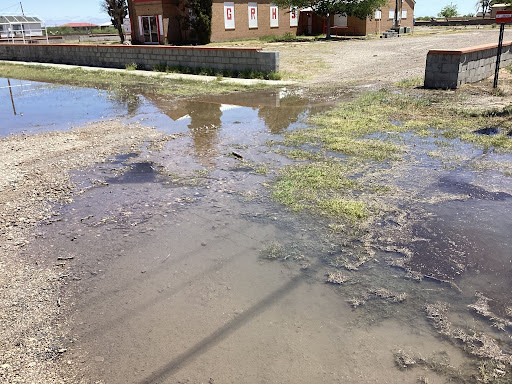
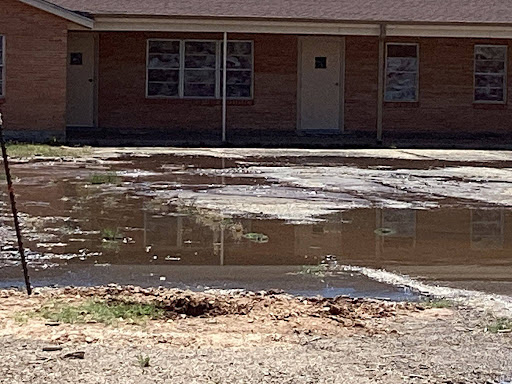
An oil leak under the First Baptist Church in Grandfalls, TX is bringing oil mixed with water to the surface.
Source: Schuyler Wight
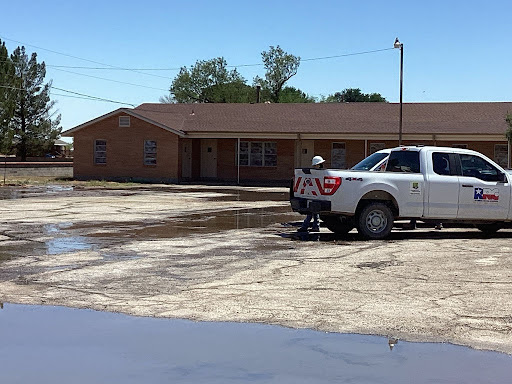
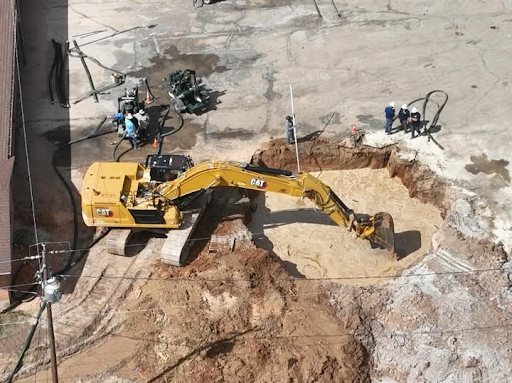
The Railroad Commission is on the scene working to contain the leak.
Source: Bill Burch
“It’s time to stop injecting in areas that are overpressurized, where we keep seeing these problems,” said Julie Range, Commission Shift Policy Manager. “The combination of overpressurized fluids and unplugged conduits is creating these very expensive messes. It would be better to prevent this problem than to fix it, especially when the costs fall on taxpayers and pose the grave risk of poisoning our priceless groundwater.”
In its upcoming rulemaking for inactive wells, we urge the Railroad Commission to deny plugging extensions for areas that are overpressurized, since these wells can become conduits for these toxic, salty fluids.
###