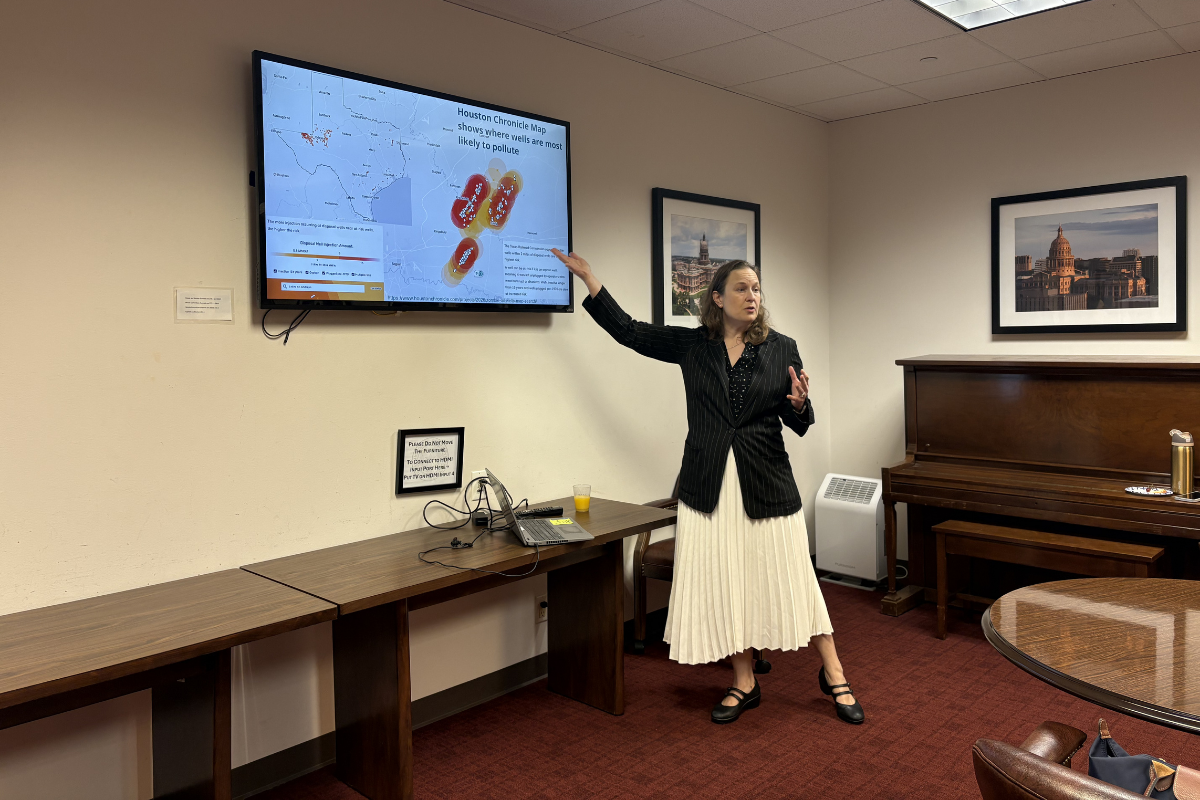
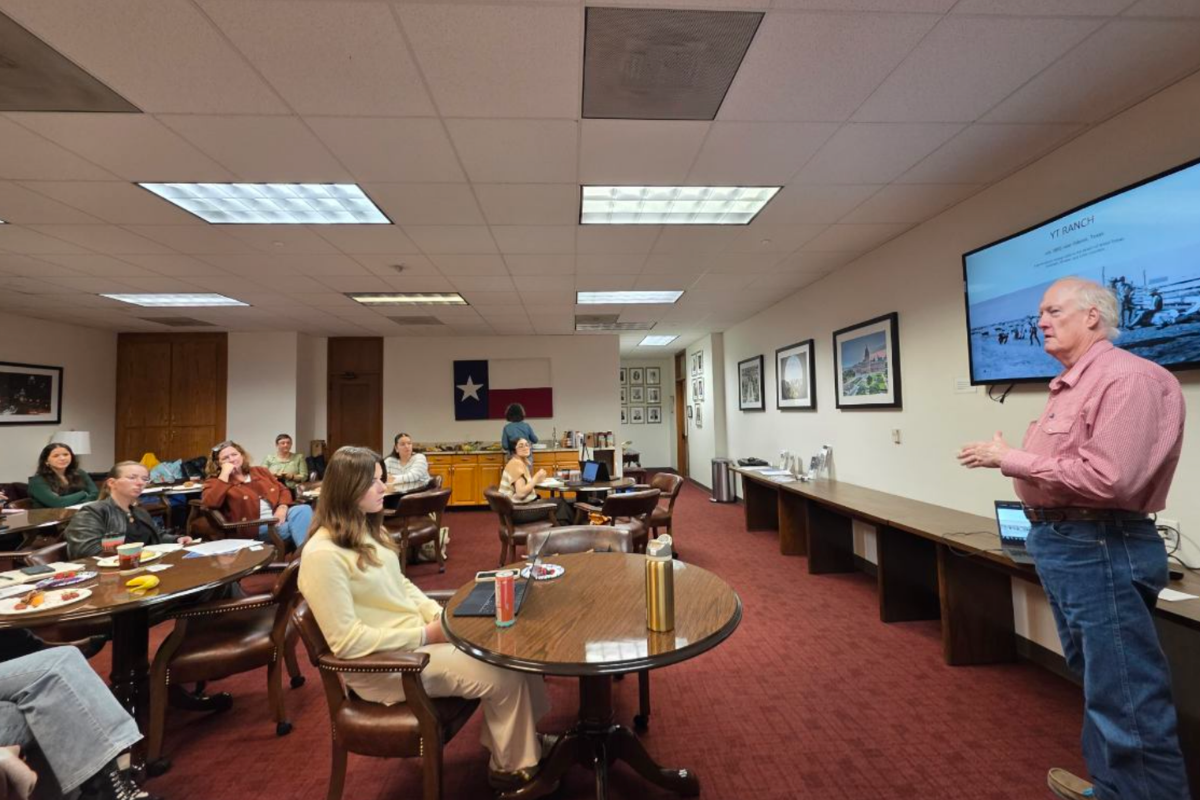
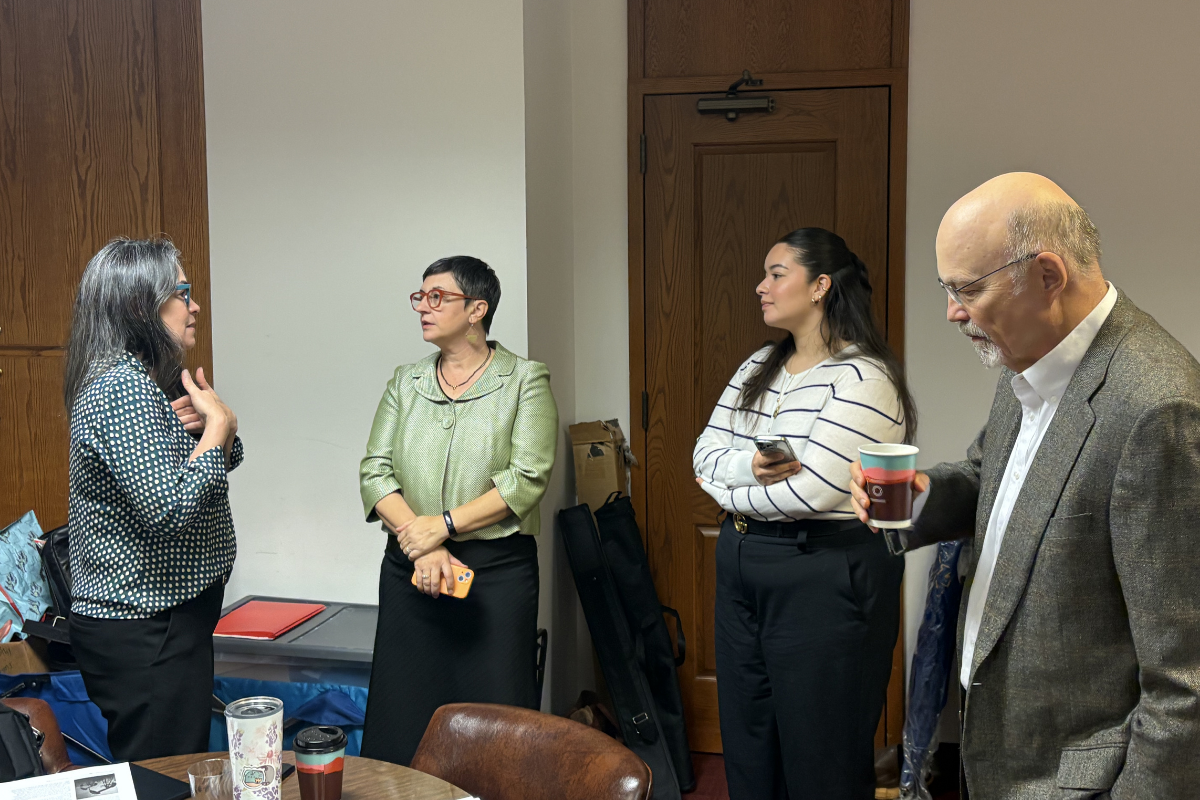
Last Friday, Commission Shift and Clean Water Action hosted rancher and landowner Schuyler Wight at the Texas Capitol for a Learn at the Lege event to educate lawmakers and their staff on how inadequate oversight of oil and gas activities is allowing pressurized subsurface injection to interact with unplugged and poorly plugged oil and gas wells, creating Texas-sized messes.
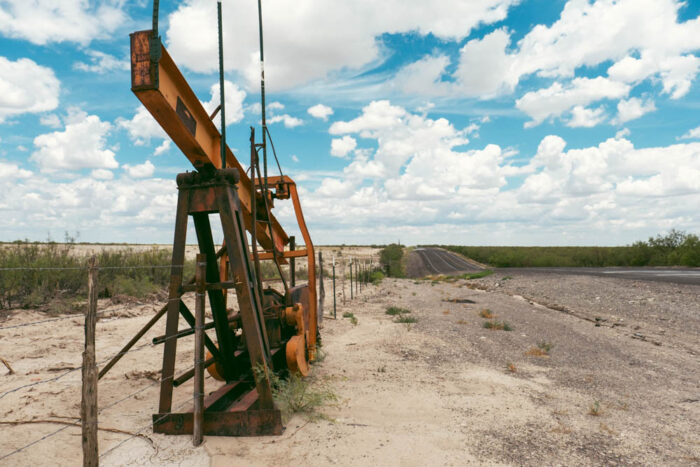
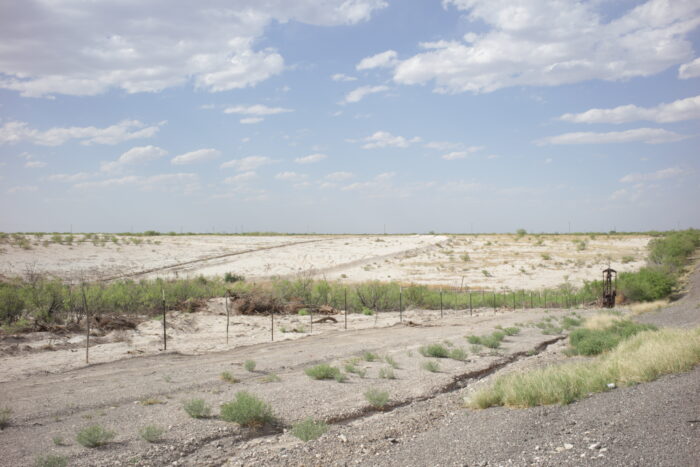
Schuyler provided many examples of failing wells on his property and other properties in the area and spoke of his grave concerns about water quality and depletion in West Texas. He shared his frustrations with RRC oversight and trying to get them to plug wells and hold operators accountable.
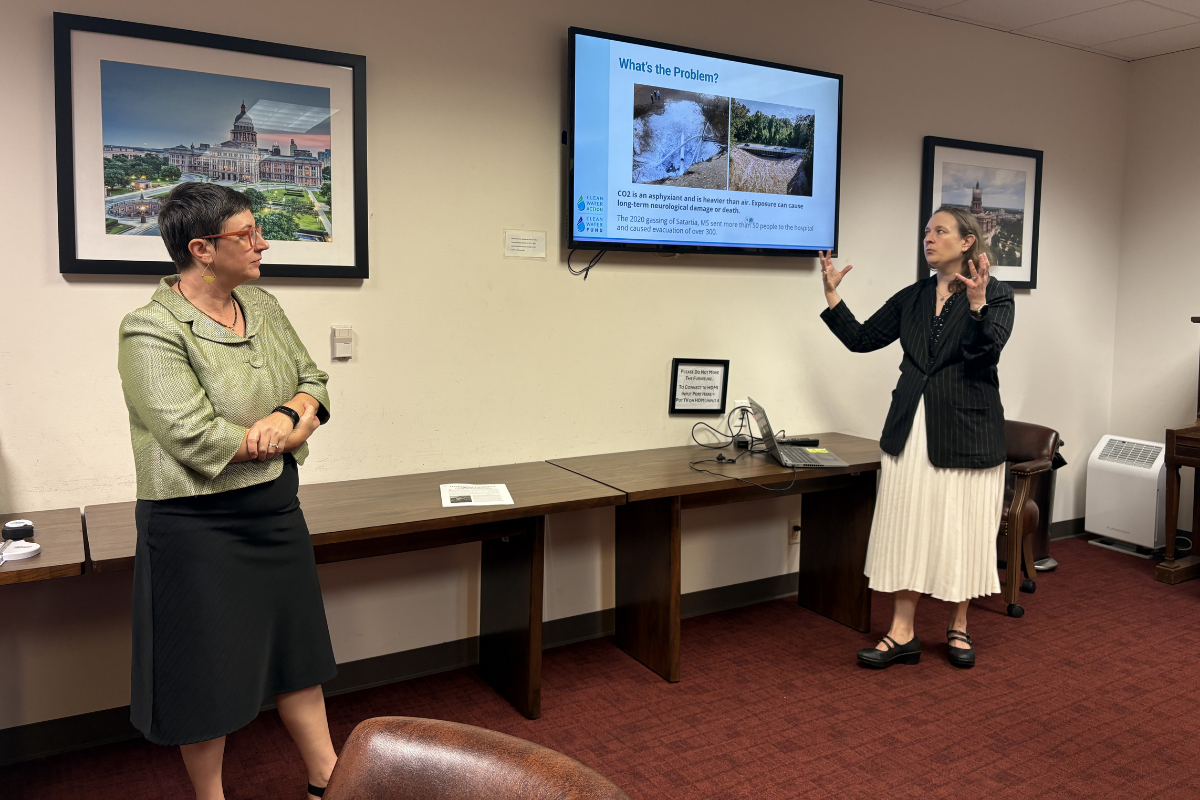
Julie Range, Commission Shift’s policy manager, shared more information about how the science is becoming clearer that the growing volume of reinjected produced water in Class II wells is pressurizing the subsurface and leading to more leaking wells that risk polluting our surface and our aquifers. Additionally, the Railroad Commission (RRC) acknowledges that the problem is growing worse. The RRC has plugged almost as many wells in the past 6 months as it did the year prior, and it is carrying a higher balance of high-priority wells than the year prior. The RRC is reacting to this by offering new injection guidelines in the Permian Basin and proposing new emergency response plans that lean on operators to help clean up these messes.
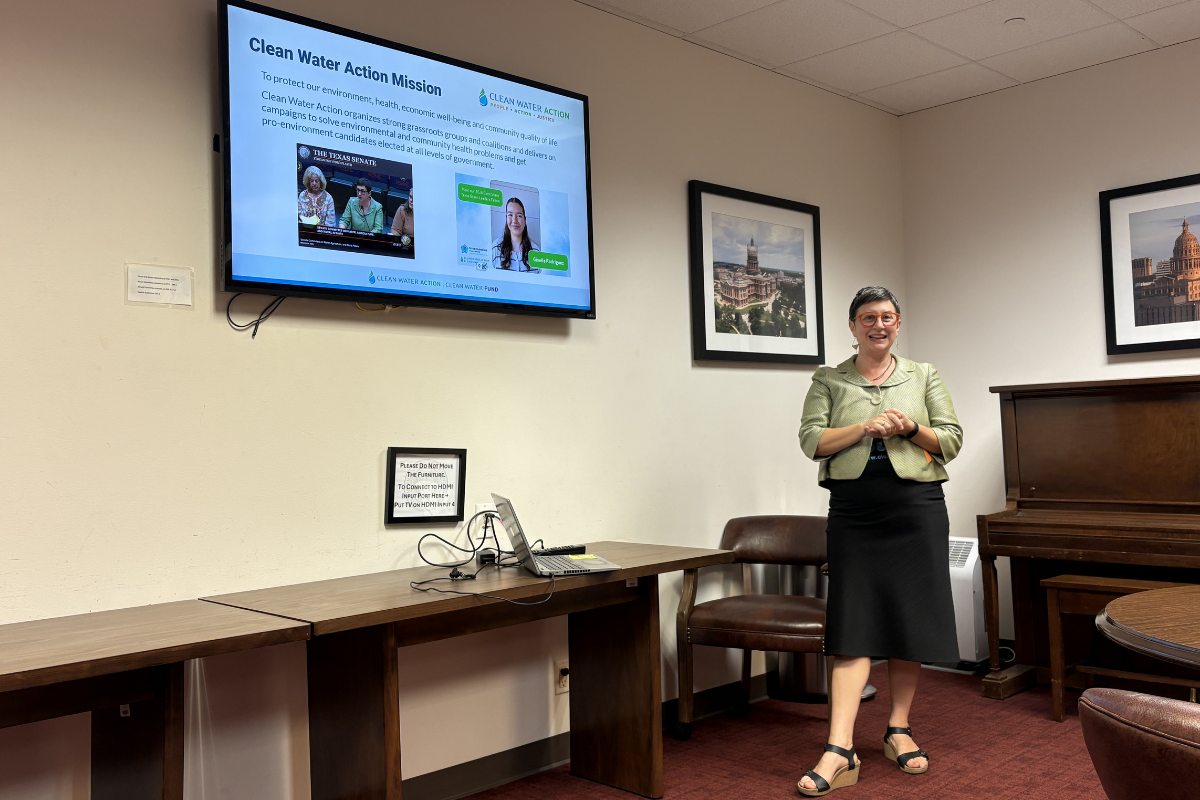
Becky Smith, Texas Director for Clean Water Action, then expanded on our concern that the many problems we see with Class II injection could also be experienced with carbon dioxide sequestration, with the added risk of asphyxiation from failures of carbon dioxide transportation pipelines, because CO2 is heavier than air.
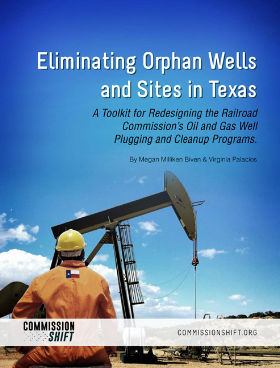
A few of the suggestions offered include:
Attendees engaged with many questions throughout the presentation. We hope the event helped raise awareness on the risks of allowing produced water injection to overpressurize the subsurface and the need for the legislature to increase its oversight of the Railroad Commission’s reactive response to these failures. It is important that we recognize the risks posed by ignoring the dangerous combination of these problems and look for ways we can address and prevent these failures.
View Schuyler’s slides here, and view Becky and Julie’s slides here.