The Railroad Commission (RRC) permits, monitors, and enforces rules for all Texas oil and gas development. RRC decisions are critical to public health and climate emissions, yet the agency operates with little public accountability. For instance, the three elected Commissioners have deep financial ties to the industry they regulate, with two-thirds of their campaign contributions coming from oil and gas.
The RRC holds monthly open meetings. While challenging to follow, the open meetings are a valuable opportunity to get issues on the record and learn more about decisions that affect us and our communities.
The open meeting agenda for August 18th, 2026 at 9:30 AM is available.
Below are our agenda highlights with some additional notes and context.
Item 8. ECTOR COUNTY. Application of Republic EES LLC to Renew its Permit to Operate a Commercial Stationary Treatment, Reclamation Plant, and Disposal Facility for Oil and Gas Waste.
Item 9. JEFFERSON COUNTY – Application of ExxonMobil Low Carbon Solutions Onshore Storage LLC for a Class VI Underground Injection Control Permit for Geologic Storage and Associated Injection of Anthropogenic Carbon Dioxide (CO2) for the Rose Carbon Capture and Storage Project.
Item 10. CALDWELL COUNTY – Complaint of Hankey Family Limited Partnership that Viva Petrol LLP Does Not Have a Good Faith Claim to Operate. Proposal for Decision filed July 8, 2026. The Examiners recommend the Commission find Viva Petrol LLP does not have a good faith claim to operate the Lease, order any plugging extension cancelled, and order Viva Petrol LLP to plug and abandon the Wells. There were six wells on the lease.
Item 11. Commission Called Hearing at the Request of Waste Facilities, Inc. (Operator No. 900260) to Contest the Permit Conditions Included on its Facility Permit to Operate an On-Lease Commercial Solid Oil and Gas Waste Recycling Facility – Mobile Recycling Roadbase. Proposal for Decision filed March 24, 2026. Commission Shift wrote about this item in our post about the May 12, 2026 Open Meeting. Chairman Wright and Commissioner Craddick had moved to pass the agenda item to the next conference, though it was not discussed at the June 2026 Open meeting. No new information has been filed on this case since the May 2026 Open Meeting.
Item 13. GUADALUPE COUNTY – Application of Three J Energy, Inc. (Operator No. 857686) to Partially Supersede the Final Order Entered on May 17, 2023, in Oil and Gas Docket No. OG-23-00012755: Complaint of Roy J. and Sandra Lankford that Three J Energy, Inc. (Operator No. 857686) Does Not Have a Good Faith Claim to Operate. Proposal for decision filed June 29, 2026. The Examiners recommend denial of Three J’s application. The landowners are asking that the well be plugged. The operator has a new mineral lease for the well, and says it supports his good faith claim. The landowners says he signed the lease for the sole purpose of having the well plugged. The operator does not have financial assurance on file with the commission.
Item 15. MCMULLEN COUNTY – Complaint of McMullen Groundwater Conservation District Against ETC Texas P/L, Ltd Regarding Its Renewal Permit Issued for injection into reservoirs productive of oil, gas, or geothermal resources. There is no proposal for decision filed in this case as of August 11, 2026. McMullen GCD is requesting that “the ALJ issue an order establishing that (1) at hearing, ETC’s permit application should be reviewed as a new permit application, and (2) ETC bears the burden of proof at the hearing.” ETC requested that the ALJ convene a prehearing conference and give McMullen GCD a deadline for alleging any deficiencies in ETC’s permit renewal.
Items 18 to 23 involve several leases in Bastrop County between Trivista Operating and related mineral owners.
Items 24 – 26 are Motions for Rehearing filed by Trivista related to different leases in Bastrop County where the RRC determined Trivista did not have a good faith claim to operate at the May 12th open meeting. Trivista has since changed their attorney. On Apr 2, 2026, Trivista filed for Chapter 11 bankruptcy. On May 31, 2026, Trivista changed management, and they are arguing that their new management is actively working to bring the operator into compliance with all Commission requirements.
Items 27 – 37 are Motions for Rehearing for operators who were denied P-5 Organization Report Renewal, which is required to operate in the state of Texas. Cumulatively, these operators were flagged for 284 inactive wells out of compliance, with the largest offenders being CR2 Energy with 71 wells and Vaquero Operating with 124 wells.
Item 28. OG-26-00031255: For Denial of P-5 Organization Report Renewal for CR2 Energy, LLC (Operator No. 101608) Due to the Operator’s Failure to Bring Inactive Wells into Compliance with the Requirements of 16 TAC §3.15; Motion for Rehearing (71 wells). Court documents for CR2 Energy, LLC cited 71 inactive wells. Records today indicate the company still holds 20 ‘active’ wells. Reviewing production data for 2025, CR2 wells produced no oil and only 5,657 mcf of gas. Public records indicate this company is privately held, with production beginning in 2023. It took only 5 notices of violation and 2 enforcement actions for this young operation with very old wells to lose its P-5 license to operate.
Item 33. OG-26-00031274: For Denial of P-5 Organization Report Renewal for Vaquero Operating (Operator No. 882776) Due to the Operator’s Failure to Bring Inactive Wells into Compliance with the Requirements of 16 TAC §3.15; Motion for Rehearing (124 wells.) Vaquero has had a whopping 383 notices of violation since 2015, with 99 of those referred for legal enforcement, 11 severance/seal orders were issued and 4 wells were referred to state-managed plugging. 88 wells were non-compliant upon 315 reinspections, which indicates the company has done a poor job correcting problems. The most common violations were for inactive unplugged wells, unpermitted disposal of oil and gas wastes, and well signage.
Item 34. OG-26-00031669: For Denial of P-5 Organization Report Renewal for Lodestone Operating, Incorporated (Operator No. 100710) Due to the Operator’s Failure to Bring Inactive Wells into Compliance with the Requirements of 16 TAC §3.15; Motion for Rehearing (25 wells). Court documents for Lodestar indicate 25 inactive wells, and 32 violations since 2023 for signage and inactive-well issues, and 3 severance/seal orders.
There are 5 flaring rule exception requests on the agenda from counties near Lubbock, in the Permian, and down to South Texas. Studies have shown increased odds of preterm birth for Hispanic mothers in the Eagle Ford Shale living next to high amounts of flaring.
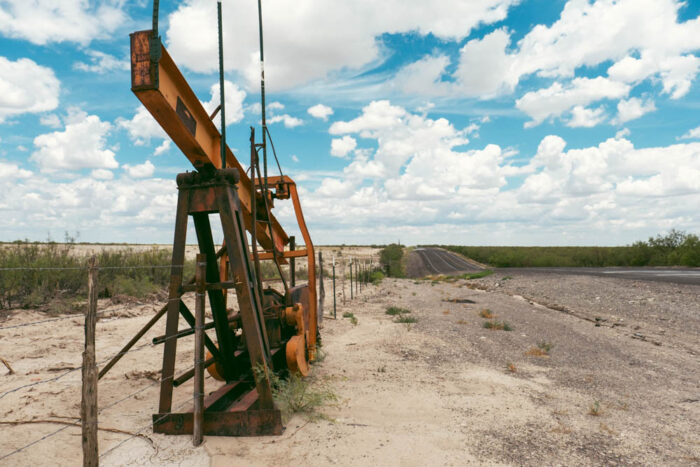
There are 9 joint motions for rehearing by operators due to violations of inactive well rules, which could cause the operators to lose their ability to operate in Texas. RRC is considering denying motions for rehearing for operators holding 172 inactive wells, per court records. These wells will likely be orphaned if no operators take over the wells within one year, and the state will have to pay to plug the wells.
34 companies are out of compliance with Rule 15 inactive well requirements. RRC can prevent them from operating in Texas until they comply, which could include plugging or removing surface equipment.
RRC may enforce plugging requirements on dry and inactive wells in 35 default orders and another 12 agreed enforcement orders.
Item 878. Fiscal Year 2027 Operating Budget.
Item 879. Legislative Appropriations Request for Fiscal Year 2028-2029.
Items 881 and 882. Oil Field Cleanup Program Quarterly Status Report, Fiscal Year 2026, 2nd and 3rd quarters.
We typically don’t see specific items for presentation by individual Railroad Commissioners on the Open Meeting Agenda. This is a bit unusual.
Item 883. Update on Outreach Activities Performed by the Office of Public Engagement.
Item 884. Proposal for Updated Public Engagement and Participation Policy. On June 17th, Commission Shift invited the Railroad Commission to attend an event we planned in Carrizo Springs for August 8, 2026. We received an email indicating that the request would need to be approved by leadership and that we would hear back in 5 – 7 business days. We did not hear back in that timeframe, and followed up with the RRC on July 6th. But they never responded to tell us whether they would attend or not.
At the April 14th Open Meeting, Commission Shift’s executive director Virginia Palacios gave Public Input, sharing that community members in East Texas asked the RRC to send someone to meet with their community and the RRC refused and directed the community to only communicate with the RRC’s attorneys. After Virginia’s Public Input, Commissioner Christian said that because some community members in a different community had been verbally aggressive at one point, that he didn’t want to send his staff to meet with the community requesting RRC staff to meet with them. This is a problem. It is not appropriate for state agencies overseeing a dangerous industry to refuse to meet with members of the public simply because members of the public expressed themselves.
Commission Shift has continued to advocate for Remote Public Input at Railroad Commission meetings to increase opportunities for impacted community members in distant parts of the state to address all three Railroad Commissioners at the same time. At previous Railroad Commission Open Meetings, Commissioner Christian has argued that Remote Public Input is not necessary because all three commissioners are available to speak with members of the public over the phone. The commissioners have touted the Office of Public Engagement as evidence that the agency is available to the public, yet the Commissioners are not allowing the Office of Public Engagement to meet public requests. Commission Shift requested an in-person meeting with Commissioner Christian’s office on May 29th, but no response was ever received. Our evidence shows that the Commissioners are choosing to avoid meeting with constituents that have problems the agency needs to solve.
Item 885. Election of the Chairman of the Railroad Commission.
The deadline to sign up to address the commission on an agenda item or during public input is noon Mon, August 17th. (Note: They don’t have to call on you if you’re commenting on an agenda item). Instructions for registering to give input can be found at the top of the RRC’s agenda for the open meeting.
People who want to speak on an item that is NOT on the agenda, must register to do so in the Public Input section. Note: you may not speak about an agenda item in the Public Input section.
RRC Open Meetings typically last less than half an hour.
Commission Shift’s Virginia Palacios will be giving public input in person. Following the open meeting at 1 p.m. CST, we’ll also host a virtual debrief of the meeting’s agenda items and related topics. You can catch it streamed live on our Facebook page.